
OBITUARY
Phillip Lew
June 2, 1926 – September 3, 2021
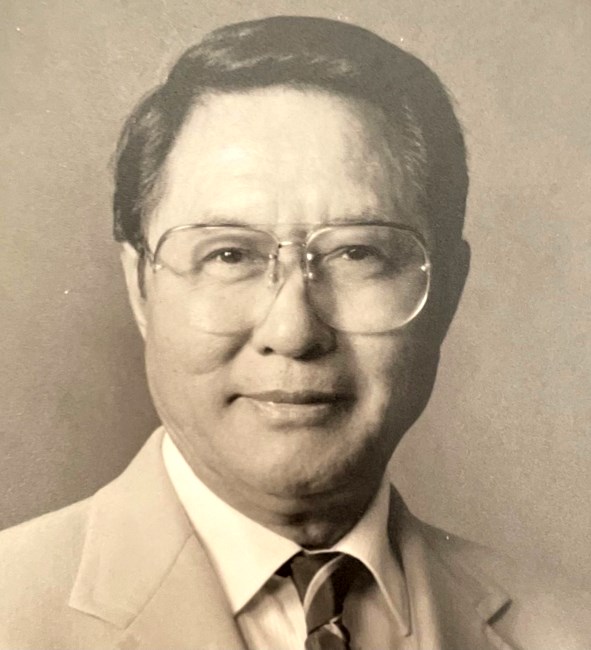
PHILLIP LEW was born on June 2, 1926 in Pyong Yang, Korea to parents Jung Hwan and mother Lee Jung Sook. Phillip was the fourth child among five, with an eldest brother, two older sisters and a younger sister.
In 1928, the Lew family moved to Wonsan, a bustling eastern seaside port town, where Jung Hwan launched a rubber shoe factory. The Lew children were all baptized at the Seuk Woo Dang Presbyterian Church despite that the Japanese, which had colonized Korea since 1910 frowned upon such things.
With the rubber factory business booming, the Lew family prospered in Wonsan. But in 1932, tragedy struck. Just days before being wed, Phillip’s big brother suffered a massive stroke and died at the age of 23.So devastated by the loss of her first-born child, Phillip’s mother Lee Jung pressed her husband to leave Wonsan and the memories of their first born child’s death. Though the business was flourishing, Elder Lew agreed to his grief-stricken wife's request and would commute the long 130-mile trek to their factory from their hometown in Pyong Yang.
The Lew family returned to Pyong Yong and purchased a sprawling property. Elder Lew hired maids and groundskeepers to care for the new home and growing kids since he was spending so much time making the long commute to the factory in Wonsan. From 1935-40 the Lew family dutifully attended Dae Hyun Presbyterian Church. But the commute to the Wonsan factory made attending church challenging. With help of friends and the blessings of the local church, Elder Lew established a satellite church along the commuter route to Wonsan and their rubber factory. Young Phillip chose to stick with his childhood Church and friends in his hometown Pyong Yang, religiously attending Sunday school and singing in the choir.
From 1941-43, the Lew family sent Phillip to an elite private school in Tokyo at Keio University. But as World War II expanded across the Pacific Theater, the Americans began to bomb Japan, including Tokyo. Phillip fled Keio University and returned to Pyong Yang. Under the pressures of the war and impending defeat, the Japanese oppression efforts to stifle Christianity grew stronger than ever. But Phillip and his family continued to defy the Japanese and kept their Christian faith strong and enduring.
In 1944, Phillip held a teaching position at Soong Ee Girl’s primary school where he taught English. Though the war with Japan was brought to an end, Phillip was arrested by the Red Chinese Army just as he was about to enter the doors of his hometown Church where he was serving as the youth choir director. Sent to a labor camp, he was tortured daily and starved to near death. Then one day with no explanation, the Communists loaded the weakened and malnourished Phillip Lew into a wooden cart and dumped him in front of his parents’ home.
New Year’s Eve 1947. Elder Lew led his son Phillip Lew on a treacherous trip to the newly established 38th Parallel, separating North from South Korea. Taking cover for hours in a freezing river, the father and son hid under a patch of floating logs. The Elder Lew and son narrowly escaped the North Korean Army hunting them down, finally finding their way to Seoul.1948. The Elder Lew would make the treacherous pilgrimage into South Korea several times more in order to bring each member of the Lew family to Seoul. There, they would start a new life with nothing, but the clothes on their backs. Phillip would take a position teaching foreign languages at Won Joo High School, a stronghold city for Christian Methodists. Together with other families, the Lews organized the first Presbyterian Church in Won Joo. 1949. Phillip Lew was offered a job as a budget analyst at the American Embassy in the finance department. Keeping close ties to his Christian friends and music was of great importance to him. He loved God.
He loved music. 1953. With the sponsorship of the American Embassy in Korea where he worked, Phillip was given a scholarship to attend Washington State University (WSU). 1957. Phillip graduated from WSU with a bachelor’s arts, and then was offered another scholarship to attend the University of South California (USC) in Los Angeles, California. While in Los Angeles, Phillip met a young Reverend Young Yong Choi, assigned to Korean Methodist Church on Robertson Blvd about 15 minutes from the Trojan USC Campus. After much deliberation and prayer, Phillip committed to becoming a Christian Methodist and joining the church choir. But music and devotion to Christian faith were not the only things that filled Phillip’s life. A striking young lady Sookyoung Yang also had come to the United States from South Korea on a student visa. Sookyoung was, working on her master’s in Education at USC. Both members of the church choir, they eventually would sing beautiful music together for over sixty years.
1960-70s. The newlyweds, Phillip and Sookyoung, juggled work, education and trying to provide for a new family that had welcomed a first-born son Jerome and daughter Andrea. Phillip would work for the LA County Library and Sookyoung taught special education. In 1983, Phillip Lew retired from the LA Country Library system. A highschool friend asked that he head the domestic expansion of a premium Korean BBQ restaurant based in Seoul called Woo Lae Oak. Over the years, Phillip would travel the country and the world establishing Woo Lae Oaks in Washington DC, New York City, Jakarta Indonesia and finally the flagship restaurant in star-studded Beverly Hills on La Cienega Blvd.
But life as a restaurant entrepreneur took a toll on Phillip’s family and Christian faith. The commute and demanding hours proved challenging to find a happy balance. Phillip would eventually leave his entrepreneurial endeavors for a much quieter, more simple life with family, church… and oh yes, golf. By any other measure, my father led an exemplary life… a perilous one at times, enduring unspeakable personal and physical suffering. He never spoke of those times. I firmly believe what sustained him through those darkest times surely was his deep faith in God, his devotion and love of family, his joy of music and gratitude for and from lasting friendships he made along the way.
Phillip Lew is an extraordinary man… an extraordinary husband… an extraordinary father … deeply loved by his family, nieces, nephews, and cousins… we love you for all that you meant to us… having lived a life so full of the purest kind of love blessed by God. “Surely goodness and mercy will follow me all the days of my life, and I will dwell in the house of the Lord forever.” Psalm 23:6
† The Lew Family would like extend gratitude to the immediate and extended family and church members for their outpouring of love and generosity †
Show your support
Visit the Cemetery
Add a Memory
Share Obituary
Get Reminders
Services
Final Resting Place
Phillip Lew
Morning Star Terrace Lawn
- Gate1
- Section1
- Lot1902
- Grave1

SHARE OBITUARYSHARE
- GET REMINDERS
v.1.18.0