
OBITUARY
Robert Patrick Oliver
June 24, 1942 – June 8, 2022
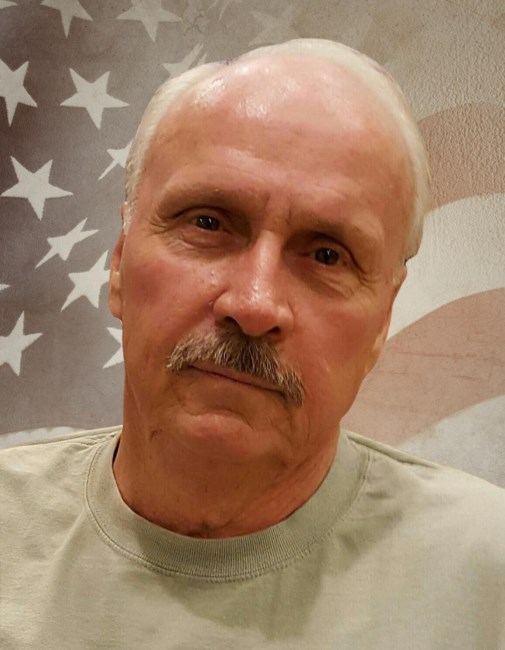
After three decades in law enforcement, Robert Patrick (Pat) Oliver was at his supervisor’s desk at the Los Angeles County Sheriff’s San Dimas station in 1995 when he suffered an extreme surge in blood pressure.
Having spent nearly 31 years of keeping tabs on inmates, patrolling the ever-expanding reaches of the county and helping to bring up a new generation of investigators, Oliver retired on disability and suddenly found himself with time on his hands. That blood pressure problem had abruptly ended his public safety career but still left him healthy enough to keep busy.
And as usual, the veteran went to work. He ended up spending the next 25 years giving back to his family, his friends and the community.
One of his most soul-satisfying pursuits was his consuming involvement with Make-A-Wish, a charity that fulfills wishes for critically ill children; taking them to Hawaii, among other destinations, or introducing them to celebrities the kids idolized.
With a life in retirement sometimes busier than his career as a cop, Oliver also enjoyed meeting with friends, fishing off the California coast, and trying as many restaurants as it’s possible for a man with eclectic tastes to try in a city as big as Los Angeles.
“Being a father was a big part of his life,” said Jamie Oliver Lamb, one of his three daughters, who added that he was a devoted protector and provider who often took each of them out on dates to show how special they were to him.
Oliver, who was born on June 24, 1942, died of pancreatic cancer June 8, in a nursing home in the San Gabriel Valley, a few weeks shy of his 80th birthday. A memorial service will be held July 11 in Whittier.
A quintessential Los Angeles native, Oliver grew up in Lynwood and South Gate and graduated from South Gate High School on June 16, 1960. One week later, he joined the U.S. Navy for a three-year hitch; the Navy trained him as an electrician, a trade that would stand him in good stead decades later, when he was remodeling his house. Navy service was also where he learned about discipline, and devotion to public service – essential ingredients for those who want to excel in the military as well as law enforcement.
Oliver joined the sheriff’s department in May of 1964 and a little over a year later found himself in the city streets, standing guard with a shotgun as the maelstrom of the Watts riots swirled around him. For most of his career, however, Oliver worked out of the limelight, in various sheriff’s stations around the county, prowling the streets, first as a deputy sheriff, then, after promotion to sergeant, as a supervisor. For many years, Oliver also worked as a detective, chasing car thieves and serving on the child abuse detail.
Brad Ritchey remembers working with Oliver in the sheriff’s office in Carson. This was in the late 1980s and by now, Oliver, who was promoted to sergeant in 1984, was a seasoned detective.
“He was one of the investigators working gang enforcement,” Ritchey said, “and that’s where they assigned me.” At that time, Ritchey said, there were “16 different gangs in our community. They were assaulting people, stealing cars, breaking into houses. Being new to the detective bureau, I followed Pat’s lead. He explained what the process was, what was necessary for us to do our job. He had the type of personality where he didn’t get in people’s faces. He got them to talk to him because he was understanding; very calm, intelligent, persistent, even sometimes a bit sympathetic. He had those talents to get them to tell him what they did. If this gang member kid was in trouble, he’d open up and talk to Pat readily. Pat was able to convince them it was in their best interest.”
But Oliver also got to see the heartbreaking incidents of child abuse, a side of law enforcement that many don’t see, and when they do it has a profound effect on their lives.
“He had such a good heart,” his former wife, Catherine Oliver, said, when asked about how Oliver’s job affected him. There was one incident, she said, that “impacted him so much.” Oliver came home that night and told Catherine that a young woman had left her toddler in the care of a boyfriend that ended up severely abusing him. “That was one time,” Catherine said, “that his feelings came out almost to the point of tears.”
Indeed, many of the people who knew him rarely saw that side of the man.
“Pat was a plain-spoken, unemotional guy who told you what he thought,” his cousin, Jaxon Van Derbeken, said of the man he knew as “Uncle Pat.” “And he had a good sense of humor.” For the most part, Van Derbeken said, Oliver “didn’t tell many war stories, but he told a few.” Mostly, it was about the Watts riots, the melee that tore the city apart in August 1965 – “he said it was kind of like the Wild West.”
As a supervisor, Oliver was well respected and stood out in a field of high-ranking officers. George Rivera, who was in his twenties when he worked for Oliver as a patrol deputy, said Oliver “was well liked by everybody. There was a lot of trust. And what you saw was what you got.” Rivera said that in those days, life in the sheriff’s office was hectic.
“There was a high volume of calls – high-risk situations, things like ‘subject with a gun’,” Rivera said. “He showed a lot of poise under pressure. He was always even-keeled.”
After he retired, in March 1995, Oliver decided it was time to concentrate on rebuilding his house in Valinda (near La Puente). He had moved there to be close to his daughters.
“It was a wreck,” Van Derbeken said. “It became a constant project over two decades.” Long before YouTube came along, with its handy DIY videos, Oliver learned how to do this intricate work by watching instructional films on cable television. And it also helped that, as his cousin said, “he liked taking things apart and putting them back together. He loved understanding how things worked and could do anything in construction.” After more than a decade of diligent labor, Oliver made sure to sell his rebuilt home to a fledgling Los Angeles police officer.
But he didn't just devote his time to his own project; he shared his talents with his relatives, spending months on a custom storage unit for Van Derbeken’s artist father and helping family members on countless projects.
He also spent more time with many of the people he’d met over the decades. Chris Patam and his wife Renée, for example, became close to Oliver. Renée is the daughter of Lu Engstrom; Lu and Renée grew up in the Lynwood apartment house owned by Oliver and his mother.
“Uncle Pat spent every holiday with us for the past 20 years,” Patam said. “My sons and I got him into watching Marvel movies. And we went on cruises and vacations together.”
For her part, Engstrom got Oliver into the ranks of volunteers with Make-A-Wish. “We were granting wishes to critically ill children,” she said. “He would interview the parents, and I would interview the children. One little boy wanted to go to the Pokemon factory in Japan.” (Make-A-Wish is funded by donations.)
At the same time, Oliver was busy learning how to be a massage therapist; he and other students practiced on his daughter Jamie, a high school track and field athlete.
“He went to all my track meets,” Jamie said, “and those were some of my fondest memories. He toured the country and went to many big races, Ironman competitions, ended up traveling a great deal, applying his newfound skill at Ironman competitions and other athletic events. He was in it from when he retired until the early 2000s.”
Susan Daigh, a now-retired detective in the sheriff’s department, said she and Oliver became friends and Oliver, who always liked being near the water, would come visit Daigh and her husband in Huntington Beach, frequently going out on their boat for an afternoon’s venture, and house-sitting for them when they were out of town.
“He loved my snowball Christmas cookies that were covered in powdered sugar,” she said in an email. “I told him not to eat them in the car as they would make a mess. He left our Huntington Beach home with a package of my cookies and he said by the time he got home the cookies were gone and the front of his shirt was covered in powdered sugar. This past December my husband and I went to visit Pat when he was in a nursing home and I made some of my snowball cookies and took them to him. He had the biggest smile on his face after he took a bite.”
By the time he was in his 70s, Oliver suspected his health was starting to fail. Leonard Valdez, a longtime golfing buddy, remembered a day about 10 years ago when “one day, he said ‘let’s go hit a bunch of balls.’ He hit five or six, then he comes to me, and says” – holding out his bag of clubs – “‘these are yours. I can’t hit the balls. I have a bad back’; that was the last time he had anything to do with golf.”
Looking back on his friendship with Oliver, Valdez said, “he was kind of a quiet guy.” From time to time, “he’d call to check in. He knew there was a health problem. One day, he said ‘I’m going to move into assisted living.’ He was having trouble with balance, and a bit of memory loss. Pat was a very good friend. We used to buy each other lunch on our birthdays.”
Oliver’s memorial service will take place at 1 p.m. July 11 at the Memorial Chapel at Rose Hills Cemetery, 3888 Workman Mill Road, Whittier, CA 90601.
He is survived by his three daughters, Tammy Lee Tarin, Lisa Oliver Brown and Jamie Oliver Lamb, many grandchildren and great-grandchildren.
The family suggests contributions to Make-A-Wish America, https://wish.org; or, by mail, to Make-A-Wish America, 1702 E. Highland Ave., Suite 400, Phoenix AZ 85016.
Fond memories and expressions of sympathy may be shared at www.rosehills.com for the Oliver family.
Show your support
Visit the Cemetery
Add a Memory
Share Obituary
Get Reminders
Services
Final Resting Place
Robert Patrick Oliver
The Hall of Reflection Niches
- Gate1
- Section2
- Tier701D
- Niche2

SHARE OBITUARYSHARE
- GET REMINDERS
v.1.18.0